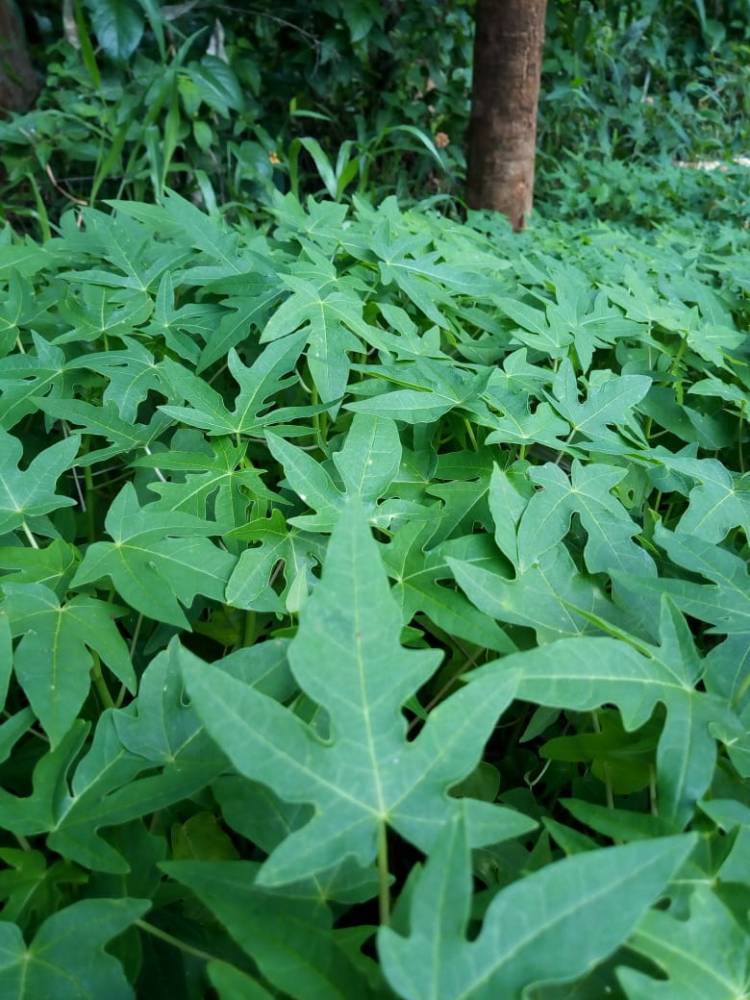
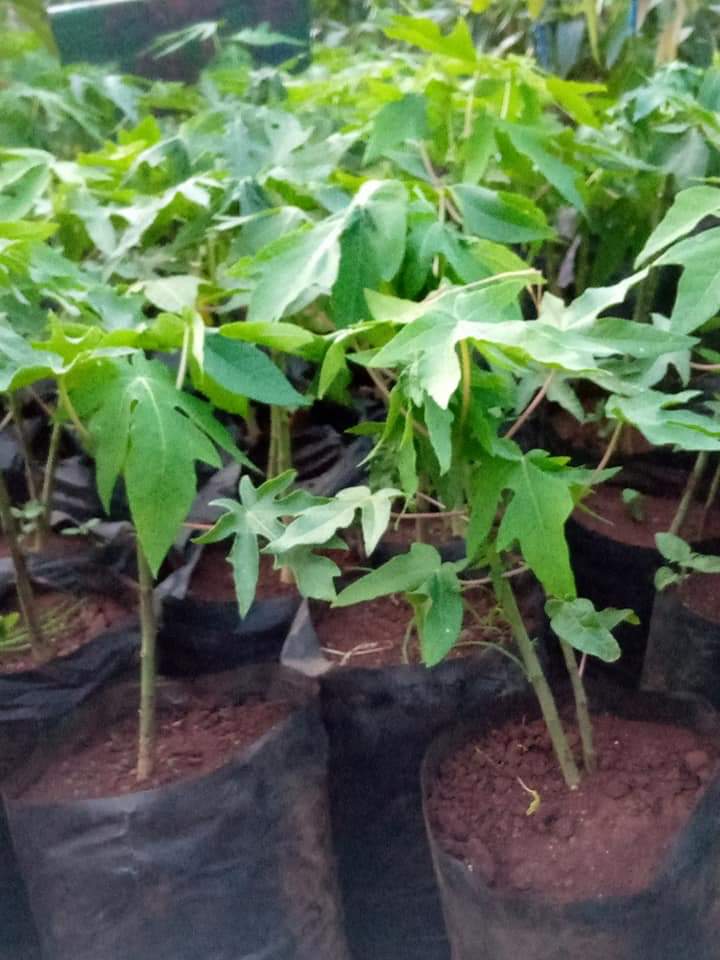
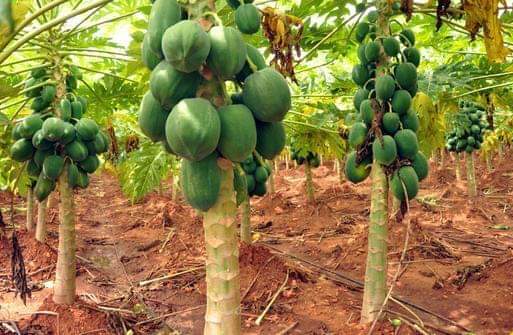


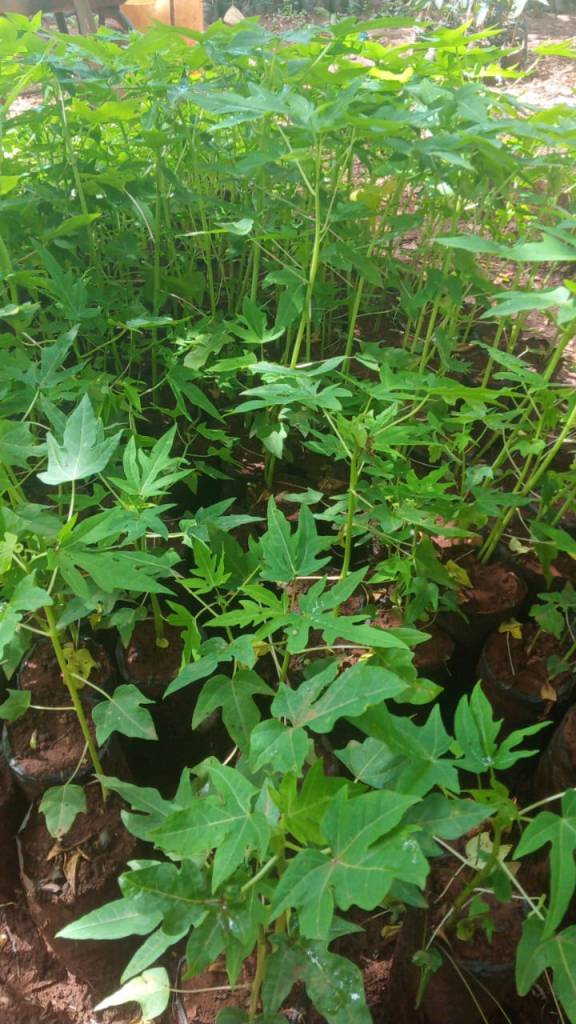
The plants grow in three sexes: male, female and hermaphrodite. The male produces only pollen, never fruit. The female produces small, inedible fruits unless pollinated. The hermaphrodite can self-pollinate as its flowers contain both male stamens and female ovaries.
The optimal temperature range for pawpaw in Kenya is between 25°C and 28°C, and production normally peaks between August and October.
Pawpaw grow and produce well on a wide variety of soil types. Under favorable conditions, the root system can penetrate to a depth of 2m, but most of the roots responsible for nutrient uptake are found in the top 500mm
Correct irrigation is crucial. This starts with good drainage. Pawpaw roots will die off in over- saturated and poorly drained soil. Impermeable layers will hamper growth and production and can lead to root diseases.
Pawpaw grow best on a slight slope, which enables the runoff or drainage of excess water and prevents waterlogging.
Soil depth: Under irrigation, pawpaw grows best in soil with an unimpeded depth of more than 1m. However, if irrigation is well-planned and managed, there should be no problem on soil with an unimpeded depth of 750mm, if drainage is good.
Texture: The ideal soil for pawpaw cultivation under irrigation is a sandy loam or loam soil with a clay content of 15% to 30%. Soil with a clay content of up to 50% is also suitable. In very sandy soil, temporary over-saturation might occur when soil compaction or impermeable layers limit drainage. Sandy soil (less than 10% clay) normally has a very low water-holding capacity and nutrient status. A mulch or application of organic material can greatly increase the potential of such a soil. Seek expert advice here.
Soil structure: The ideal soil has a loose, brittle, crumbly structure.
Soil pH (water): Pawpaw grow best in soil with a pH (water) value of 6 to 6,5. If soil exchangeable aluminum (Al) is not more than 30ppm, a soil with a pH (water) of 5,5 or higher may be used. At a pH (water) value lower or higher than the 5,5 to 7,2 range, plants may suffer from trace element, phosphate or potassium deficiencies.
Can’t find what you’re looking for? Use the search form to search the site.
Get new content delivered directly to your inbox.




 GREEN SEEDLINGS & NURSERIES